Painting and Drawing

How to Make Stained Glass Art

You’re about to commence on a creative journey, and with the right guidance, you’ll be able to craft stunning stained glass art pieces. As you begin, you’ll learn the fundamentals of working with glass, from cutting and grinding to assembling and soldering. Your skills will develop, and you’ll be able to bring your unique designs to life, creating beautiful and intricate artworks that showcase your talent and attention to detail.

Key Takeaways:

To create beautiful stained glass pieces, consider the following points:

  • Choose the right materials, including glass types, coppers foil, and solders, to ensure a durable and long-lasting piece of art.
  • Develop your cutting and grinding skills to achieve precise glass cuts and smooth edges, which are vital for a professional-looking stained glass piece.
  • Pay attention to safety precautions, such as wearing protective gear and working in a well-ventilated area, to prevent injuries and ensure a successful stained glass project.

Gathering Materials and Tools

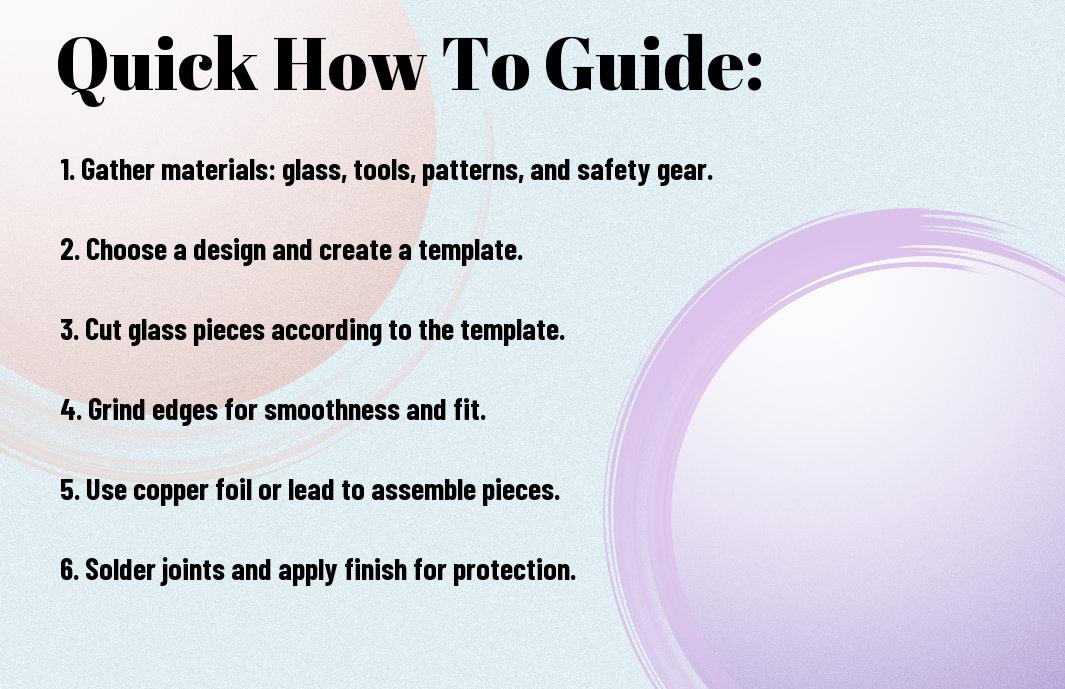
While creating stained glass art, you will need various materials and tools to bring your design to life. You will require a work surface, pattern, glass cutters, and other equipment to shape and assemble your piece.

Essential Tools for Stained Glass Art

Materials like glass cutters, breakers, and runners are necessary for cutting and shaping your glass. You will also need a workboard, solder, and flux to assemble your piece.

Selecting the Right Glass and Supplies

Tools such as patterns, cutters, and grinders will help you select the right glass and supplies for your project. You can choose from a variety of glass colors, textures, and styles to create a unique piece.

Gathering the right glass and supplies is an important step in creating your stained glass art. You can visit a craft store or online supplier to browse through different types of glass, including opalescent, iridescent, and textured glass, to find the ones that fit your design and skill level. As you select your glass, consider the color, texture, and transparency to ensure they work well together to bring your vision to life.
Designing Your Stained Glass Piece

There’s a lot to consider when designing your stained glass piece, and it begins with creating a pattern.

Tips for Creating a pattern

To develop a pattern, you should consider the following:

  • Keep it simple
  • Use bold lines

. Any design you choose will be the foundation of your stained glass piece.

Factors to Consider in Design

If you’re new to stained glass art, you’ll want to think about the following factors:

  • Color
  • Texture

. Perceiving your design as a whole will help you create a beautiful piece.

Designing your stained glass piece requires careful consideration of several factors, including:

  • Size
  • Shape
  • Theme

. Perceiving the way these elements interact will help you create a stunning stained glass piece that you’ll be proud to display.

Cutting and Shaping the Glass

Keep in mind that cutting and shaping the glass is a delicate process that requires patience and attention to detail. You will need to use specialized tools, such as glass cutters and running pliers, to score and break the glass into the desired shape.

How-to Cut Glass Safely and Effectively

One of the most important aspects of cutting glass is doing it safely and effectively. You should always wear protective gear, such as gloves and safety glasses, and make sure your work surface is clean and clear of debris.

Techniques for Smoothing Glass Edges

Some techniques for smoothing glass edges include using a glass grinder or sandpaper to remove any sharp edges or burrs. You can also use a cork or felt wheel to polish the edges and give them a smooth finish.

This technique is especially useful when working with intricate designs or delicate pieces, as it allows you to achieve a high level of precision and control. As you practice and refine your skills, you will develop your own techniques for smoothing glass edges and achieving the desired finish for your stained glass art pieces, and you will be able to create beautiful and intricate designs with confidence and precision.
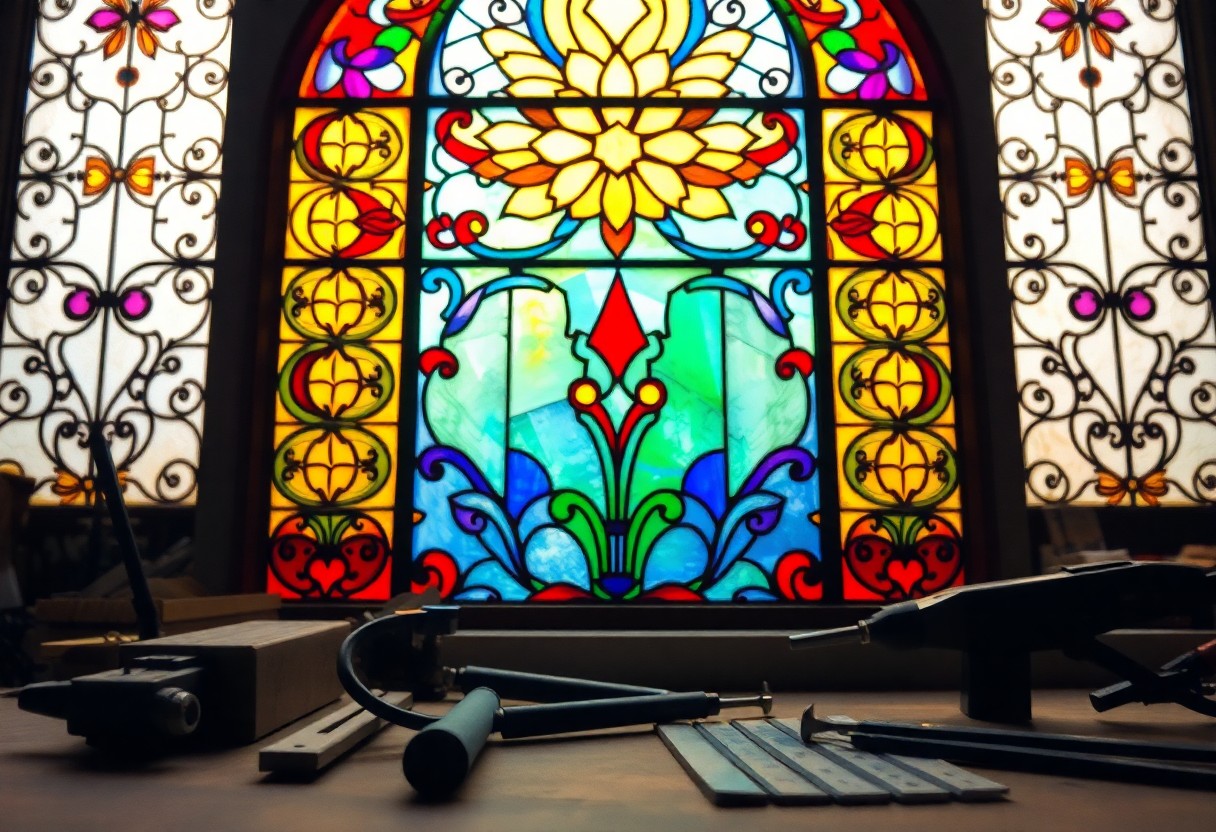
Assembling the Stained Glass Piece

Once again, attention to detail is key when assembling your stained glass piece, as it requires patience and precision to ensure a beautiful and durable result.

Copper Foil Method

Glass pieces are carefully wrapped in copper foil, allowing you to shape and assemble your design with ease and flexibility, enabling you to create intricate and delicate patterns.

Lead Came Construction

You will need to cut and assemble the lead came pieces to fit your stained glass design, requiring you to carefully plan and execute each step to achieve a sturdy and visually appealing result.

Assembling the lead came construction requires you to solder the joints, making sure they are strong and watertight, and then you will need to clean and finish your stained glass piece, applying a patina to protect the lead and enhance the colors of your artwork, allowing you to enjoy your finished piece for years to come.

Soldering and Finishing

Many stained glass artists consider soldering and finishing to be the most challenging part of the process. You will need to carefully solder your pieces together, making sure to create a strong and durable bond. This step requires patience and attention to detail to achieve a professional-looking finish.

How-to Solder Stained Glass Joints

To achieve a strong bond, you will need to apply flux to the joint and heat the solder until it melts and flows evenly. You can use a soldering iron or a torch to heat the solder, depending on your preference and the size of your project.

Tips for Achieving a Professional Finish

Joints are what hold your stained glass piece together, and a professional finish depends on them. To get a smooth finish, you can try:

  • using a high-quality solder
  • applying the right amount of flux
  • heating the solder evenly

. Knowing these tips will help you achieve a beautiful and long-lasting stained glass piece.

Howto take your stained glass piece to the next level is by paying attention to the details. You can try:

  • using a soldering iron with a fine tip
  • applying a patina to protect the solder
  • sealing the piece with a waterproof coating

. Knowing these techniques will help you create a stunning stained glass piece that will last for years to come.

Safety Precautions and Best Practices

After starting your stained glass art project, you should familiarize yourself with safety guidelines, as seen in this Easy Stained Glass Tutorial | Here’s a step by step tutorial on stained glass art, to ensure a smooth process.

Factors to Consider for a Safe Workspace

There’s a need to consider your workspace, you should have:

  • Adequate ventilation
  • Proper lighting
  • The safety of your workspace is important for your well-being.

    How-to Avoid Common Mistakes

    Consider the common mistakes that can occur during the stained glass art process, such as incorrect cutting or grinding techniques, to avoid injuries and damages.

    Best practices for avoiding mistakes include carefully planning your design, using the right tools, and taking your time to ensure accuracy and precision in your work, helping you to create a beautiful stained glass art piece that you can be proud of, and that will last for years to come, as you continue to work on your project, you will develop your skills and techniques.

    Final Words

    So, as you conclude your stained glass art project, you should feel proud of your achievement. You have successfully transformed raw materials into a beautiful piece of art. Your patience and attention to detail have paid off, and you now have a unique masterpiece to showcase. You can apply your newfound skills to create more stunning stained glass art, experimenting with different techniques and designs to make each piece truly your own.

    FAQ

    Q: What materials do I need to get started with making stained glass art?

    A: To begin creating stained glass art, you’ll need a variety of materials, including stained glass sheets in your desired colors, a glass cutter, a breaking plier, copper foil, solder, and a soldering iron. Additionally, a workboard, cutting oil, and a grinder can be helpful for more intricate projects. It’s also a good idea to have a well-ventilated workspace and safety equipment such as gloves and goggles to protect yourself from sharp edges and solder fumes.

    Q: How do I cut and shape the stained glass pieces for my art?

    A: Cutting and shaping stained glass involves several steps. First, use a glass cutter to score the glass along the line where you want to make the cut. Next, use running pliers to snap the glass along the score line, or for more curved cuts, use a breaking plier. For more intricate shapes, you may need to use a grinder to smooth out the edges. Always wear protective gear, including gloves and safety glasses, and work on a stable surface to prevent accidents.

    Q: What is the process for assembling and soldering the stained glass pieces into a complete art piece?

    A: Assembling and soldering your stained glass art involves several steps. First, wrap each piece of cut glass in copper foil, making sure to cover all edges evenly. Then, place the pieces together according to your design, ensuring they fit snugly. Apply a small amount of flux to the copper foil seams. Next, heat the solder with a soldering iron, allowing it to flow smoothly over the seams, joining the glass pieces together. After the solder has cooled, clean the piece to remove any oxidation or residue, and finally, apply a patina if desired to enhance the color and protect the solder. This process requires patience and practice to achieve professional-looking results.
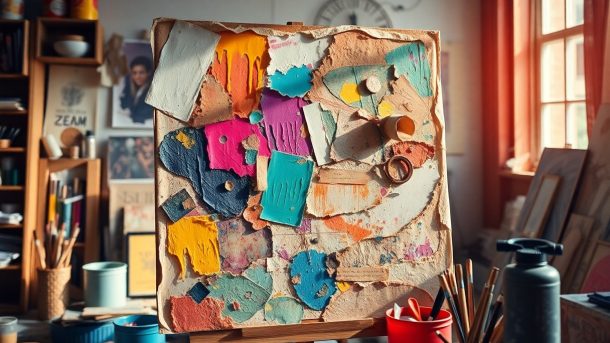
The Beauty of Mixed Media Art

As you begin on a journey to discover the enchanting world of art, you will find that mixed media art is a realm where creativity knows no bounds. You will be delighted by the eclectic blend of textures, colors, and techniques that come together to create something truly unique. Your senses will be treated to a visual feast, as you explore the intricate layers and dimensions that define this captivating art form, inviting you to experience the beauty that arises from the fusion of disparate elements.

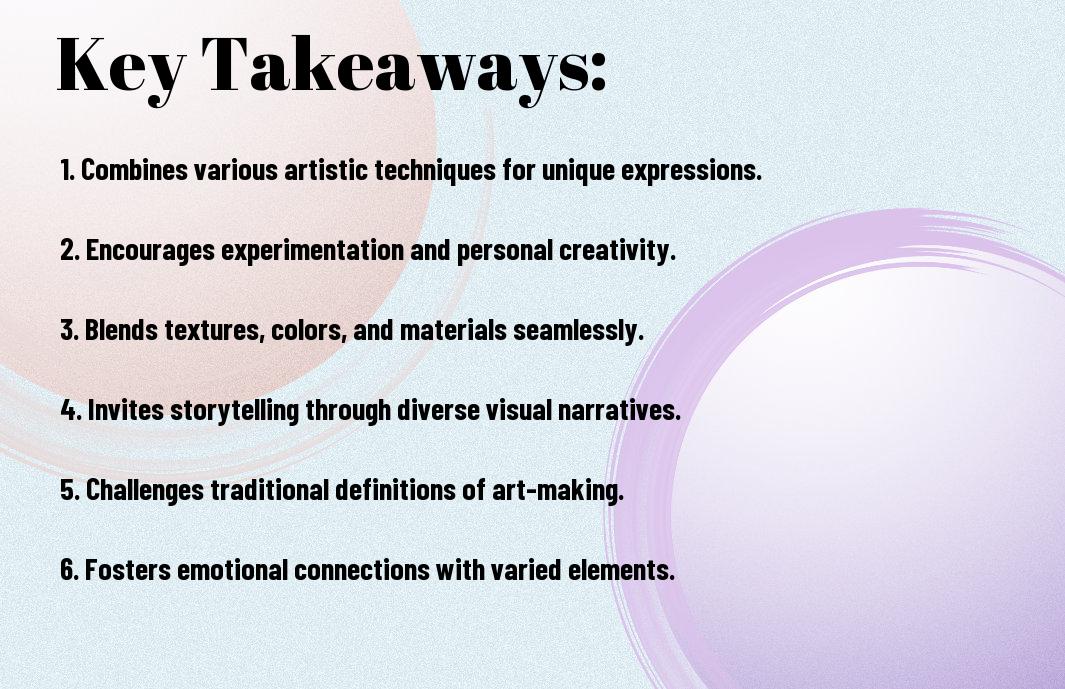
Key Takeaways:

  • The versatility of mixed media art allows artists to experiment with a wide range of materials and techniques, creating unique and innovative pieces that showcase their individual style and creativity.
  • Mixed media art often incorporates texture and dimensionality, adding depth and visual interest to the artwork, and inviting the viewer to engage with the piece on a tactile level.
  • The use of mixed media enables artists to convey complex emotions and ideas in a way that might not be possible with a single medium, resulting in thought-provoking and emotionally resonant artworks.

Evolution

A fascinating journey through the annals of art history, you will discover the captivating story of mixed media, a realm where creativity knows no bounds. As you probe into this world, you will uncover the intricate tapestry of diverse influences and innovative techniques that have shaped this art form.

Historical Background

Behind the emergence of mixed media, you will find a rich foundation of artistic experimentation, where pioneering artists boldly pushed the boundaries of traditional mediums, inviting you to explore the uncharted territories of creative expression.

Contemporary Scene

Beneath the surface of modern art, you will find a thriving community of mixed media artists, who continually redefine the genre, enticing you to immerse yourself in their vibrant, eclectic world of artistic innovation.

For instance, as you navigate the contemporary mixed media landscape, you will encounter a diverse array of styles and techniques, from collage and assemblage to digital art and installation, each one inviting you to experience the unique vision and creative genius of the artist, and to ponder the endless possibilities that this dynamic art form has to offer you.

Techniques

There’s a multitude of methods to explore in mixed media art, and as you investigate into this world, you’ll discover the perfect blend of traditional and digital techniques to suit your style.

Mixing Traditional Media

Besides the conventional paint and canvas, you can experiment with paper, fabric, and found objects to add texture and depth to your artwork, allowing you to express yourself in a unique and captivating way.

Digital Media Integration

Behind the scenes of mixed media art, digital tools can be used to enhance and manipulate your creations, offering you a wide range of possibilities to edit and refine your work.

Further exploration of digital media integration will reveal the vast array of software and apps at your disposal, enabling you to merge physical and digital elements seamlessly, and push the boundaries of your artistic expression, as you navigate the endless possibilities that this fusion has to offer, allowing you to showcase your imagination and talent in a truly innovative way.

Artists

Keep in mind that mixed media art is a realm where creativity knows no bounds, and you, as a connoisseur, are about to initiate on a fascinating journey to explore the works of visionary artists.

Pioneers of Mixed Media

For your edification, the likes of Marcel Duchamp and Hannah Höch paved the way for this eclectic art form, experimenting with unconventional materials and techniques that challenged traditional norms.

Modern-Day Masters

Against the backdrop of a constantly evolving art landscape, you will discover innovative artists pushing the boundaries of mixed media, blending disparate elements to create something entirely novel and thought-provoking.

With each new masterpiece, you are invited to partake in a world where paint, paper, fabric, and found objects converge, yielding a unique visual language that is at once captivating and intellectually stimulating, allowing you to appreciate the infinite possibilities that mixed media has to offer, and perhaps, even inspiring you to create your own distinctive works of art.

Inspiration

For your artistic pursuits, you may find solace in mixed media, where creativity knows no bounds. You can discover more about the therapeutic effects of this art form by visiting Art that Heals: The Mental Magic of Mixed Media, a fascinating exploration of its impact on your mind.

Nature and Environment

Allying yourself with the natural world, you’ll find that mixed media art often draws inspiration from the beauty of landscapes, textures, and colors found in environment, allowing you to reflect your own connection to the earth in your work.

Social and Cultural Influences

Nurtured by the diversity of human experience, your mixed media art can be influenced by the vibrant tapestry of social and cultural heritage, inviting you to incorporate unique symbols, patterns, and themes that tell a story of their own.

Inspiration for your mixed media art can be found in the world around you, as you navigate the complexities of social and cultural influences, you’ll uncover a wealth of creative possibilities, from the opulence of historical periods to the simplicity of modern street art, all waiting to be woven into the rich fabric of your artistic expression, allowing you to convey your thoughts, emotions, and experiences in a way that is uniquely yours.

Creative Process

Once again, you find yourself immersed in the world of mixed media art, where the boundaries of traditional art forms are pushed and pulled. As you explore this realm, you may stumble upon the works of artists like Arjen Roos, who showcases The Versatility of Mixed Media in My Art – Arjen Roos Art, a true testament to the medium’s expressive power.

Experimentation and Risk-Taking

Any artist worth their salt will tell you that experimentation is key to creating something truly innovative. As you launch on your own mixed media journey, you’ll discover that taking risks and trying new things is imperative to unlocking your full creative potential.

Balancing Different Elements

Between the various textures, colors, and materials, it can be daunting to balance the different elements of a mixed media piece. You’ll need to consider how each component interacts with the others, creating a harmonious whole that showcases your unique vision.

Consequently, as you work to balance the disparate elements of your artwork, you’ll develop a keen sense of intuition, learning to trust your instincts and make decisions that elevate your piece from mere mortal creation to a true masterpiece, one that reflects the very essence of your being, and the beauty that you bring to the world of mixed media art, a world where you, the artist, are the master of your destiny.

Impact

Not surprisingly, mixed media art has a profound effect on your perception of the art world and beyond. As you examine into this unique form of expression, you begin to appreciate the beauty of experimentation and creativity.

On the Art World

The boundaries of traditional art forms are pushed and pulled in fascinating ways, allowing you to experience a fresh perspective on the creative process and the artists who dare to challenge conventions.

On Society and Culture

Following the natural progression of artistic evolution, you find that mixed media art influences your worldview, encouraging you to think outside the box and question established norms.

In fact, as you explore the diverse and dynamic realm of mixed media art, you will discover that it not only reflects the complexities of your own society and culture but also inspires you to reimagine and reinterpret the world around you, fostering a deeper understanding of the human experience and your place within it.

To wrap up

The world of mixed media art has unfolded before your eyes, showcasing its vast possibilities and your imagination knows no bounds. As you probe into this realm, you discover the beauty of experimentation and the thrill of creating something unique. Your senses are treated to a kaleidoscope of textures, colors, and forms, inviting you to explore and express your own artistic voice, making mixed media art a true reflection of your creative soul.

FAQ

Q: What is mixed media art and how does it differ from other art forms?

A: Mixed media art is a unique and creative form of artistic expression that combines different artistic media, such as paint, ink, paper, fabric, and found objects, to create a single, cohesive piece of art. This distinctive approach allows artists to experiment with various textures, colors, and techniques, resulting in visually striking and thought-provoking works of art that often transcend traditional boundaries of painting, sculpture, or collage.

Q: What are the benefits of working with mixed media, and how can it enhance one’s creative process?

A: The benefits of working with mixed media are numerous. It offers artists the freedom to explore and express themselves in innovative ways, unencumbered by the constraints of a single medium. Mixed media art encourages experimentation, pushing artists to think outside the box and discover new techniques and styles. This, in turn, can lead to the development of a distinct artistic voice and a more dynamic creative process, as artists are constantly challenged to adapt and evolve their approach to incorporate diverse materials and methods.

Q: How can someone get started with creating mixed media art, especially if they have no prior experience with art or working with multiple mediums?

A: Getting started with mixed media art is accessible to anyone, regardless of their artistic background. It’s advisable to begin by gathering a variety of materials that intrigue you, such as paints, markers, different types of paper, fabric scraps, and found objects like buttons or natural elements. Experimenting with these materials, combining them in various ways, and observing how they interact can spark ideas and techniques. Additionally, taking a mixed media art class, watching online tutorials, or joining a community of mixed media artists can provide valuable guidance, inspiration, and support as you commence on your creative journey.

Skip to content