Painting

Top Fabric Painting Techniques

As you explore the world of fabric painting, you’ll discover various methods to enhance your creations. You can achieve unique, professional-looking results by mastering different techniques. Your fabric painting skills will improve with practice and experimentation. You’ll learn to select the right tools, prepare your fabric, and apply paint with precision. With these techniques, you’ll unlock new creative possibilities and take your fabric painting to the next level, producing stunning pieces that reflect your personal style and artistic vision.

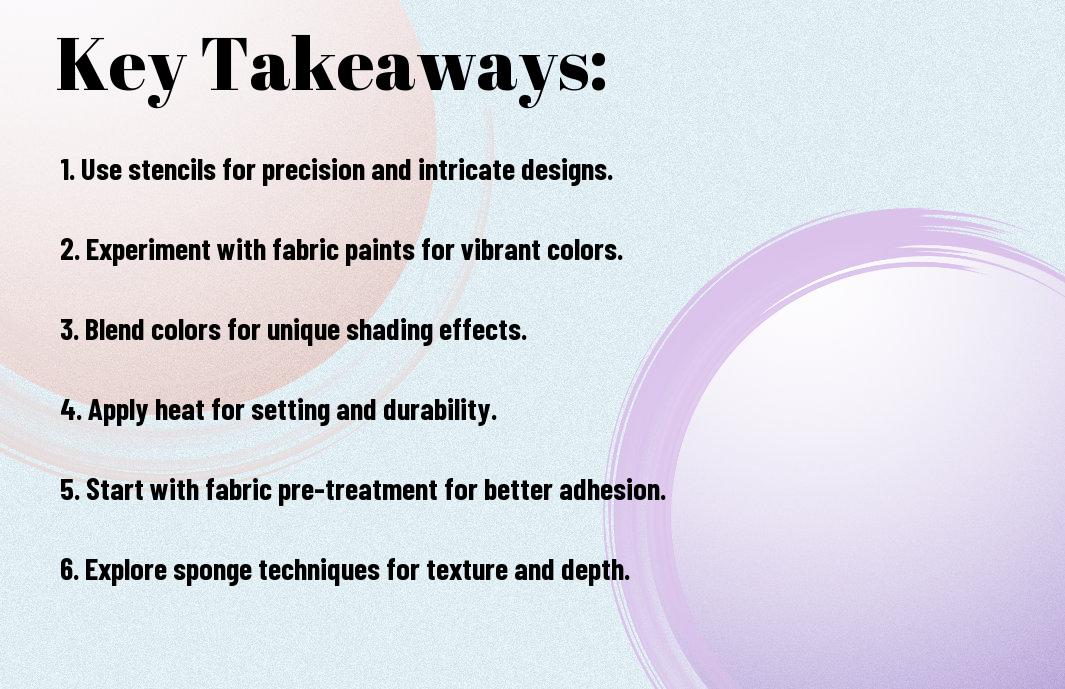
Key Takeaways:

To achieve professional-looking results in fabric painting, consider the following techniques:

  • Using resist methods, such as wax or starch, to create unique and intricate designs on fabrics like silk or cotton.
  • Applying layering techniques to build up colors and textures, allowing for greater control over the final appearance of the painted fabric.
  • Experimenting with blending methods, such as wet-on-wet or glazing, to achieve subtle, nuanced color transitions and shading effects in fabric paintings.

Preparing the Fabric

Your fabric painting journey begins with preparing the fabric, and this step is crucial to achieve the desired results. You need to choose the right fabric, prepare it for painting, and treat it to ensure the paint adheres well and lasts long.

Choosing the Right Fabric

Across various types of fabrics, you’ll find that natural fibers like cotton, linen, and silk work best for fabric painting. You can select a fabric that suits your project, considering factors like texture, weight, and color.

Pre-Treatment Methods

On the surface of your fabric, pre-treatment methods can make a significant difference. You can use methods like washing, drying, and ironing to prepare your fabric for painting, which helps to remove finishes and relax fibers.

Considering the type of fabric you’ve chosen, you may need to use specific pre-treatment methods. For example, you can use a fixative to prevent colors from bleeding or a fabric primer to create a smooth surface for painting. By doing so, you’ll ensure that your paint adheres well and your design turns out vibrant and long-lasting.
Basic Painting Techniques

Even if you’re a beginner, you can achieve professional-looking results with fabric painting by mastering the basics. You’ll need to understand color theory, brush strokes, and fabric preparation to get started.

Hand-Painting

Although hand-painting requires skill and patience, you can create unique designs with practice. You’ll be able to express your creativity and add personal touches to your projects.

Stenciling

By using stencils, you can add intricate designs and patterns to your fabric with ease. You’ll find that stenciling is a great way to achieve crisp, sharp lines and detailed designs.

Considering the variety of stencils available, you can choose from simple to complex designs, depending on your project’s requirements. You can use stencils to create repeat patterns, borders, or even entire scenes, making it a versatile technique to add to your fabric painting repertoire. You’ll be able to experiment with different stencil materials, such as plastic or metal, to achieve the desired effect on your fabric.
Advanced Techniques

Not for beginners, these methods take your fabric painting to the next level:

  1. Shibori
  2. Batik
Technique Description
Shibori Resist dyeing
Batik Wax resist

Ombre Effect

Across the fabric, you can achieve a gradual color transition by layering paints, creating a stunning ombre effect that adds depth to your work.

Resist Method

Behind the resist method lies a simple technique: applying a resist agent to your fabric before painting, allowing you to create unique, intricate designs.

Advanced techniques like the resist method require practice, but with patience, you can master the process, experimenting with different resist agents and paint combinations to achieve your desired effects, taking your fabric painting to new heights, and enabling you to create complex, multicolored designs that showcase your skill and artistry.

Design and Pattern Creation

For creating unique designs, you can visit 10 Practical Tips for Fabric Painting to explore various techniques. This will help you to enhance your fabric painting skills and create stunning designs.

Free-Hand Design

Around the time you start painting, you’ll find that free-hand design allows you to express your creativity freely, enabling you to bring your imagination to life on the fabric.

Geometric Patterns

Among the various patterns you can create, geometric patterns are a popular choice, offering a wide range of possibilities for your fabric painting projects.

At the heart of geometric pattern creation lies the use of shapes, such as triangles, squares, and circles, which you can arrange to form complex and beautiful designs, allowing you to add your personal touch to your fabric painting projects, and with practice, you’ll be able to create intricate patterns that elevate your work to the next level.

Color Selection and Mixing

To achieve vibrant and unique designs, you need to understand the fundamentals of color selection and mixing. You will learn how to choose the perfect colors for your fabric painting project and create custom hues that enhance your artwork.

Color Theory Basics

Against a backdrop of color theory, you will discover how to select colors that complement each other, creating a visually appealing palette for your fabric painting. You will understand the color wheel and how to use it to choose harmonious colors.

Mixing Custom Colors

Behind the art of mixing custom colors lies a simple technique that you can master with practice. You will learn how to combine different colors to create unique shades and tints that add depth to your fabric painting.

But as you investigate deeper into mixing custom colors, you will find that the possibilities are endless, and you can experiment with various techniques to achieve the desired effects. You can mix colors to create subtle pastels, rich jewel tones, or bold neons, depending on your artistic vision and the mood you want to convey in your fabric painting.

Special Effects and Finishing Touches

All the techniques you’ve learned so far can be enhanced with special effects and finishing touches, taking your fabric painting to the next level. You can experiment with different methods to achieve unique results, making your artwork truly personalized.

Adding Textures

Above all, adding textures can give your fabric painting depth and dimension, allowing you to create intricate and interesting designs. You can use various materials like fabric paint, glue, or even found objects to achieve the desired texture.

Sealing the Paint

Alongside protecting your artwork, sealing the paint ensures your fabric painting lasts longer and withstands wear and tear. You can use a fabric sealant or varnish to protect your design and make it more durable.

Among the various options available for sealing your paint, you can choose a spray or brush-on sealant, depending on your preference and the type of fabric you’re working with. You can also consider using a fixative to prevent the paint from smudging or fading, giving your artwork a professional finish and making it easier to care for.

Final Words

As a reminder, you now have the knowledge of top fabric painting techniques at your fingertips. You can apply these methods to create unique and personalized items, elevating your artistic skills. With practice, you will master your skills, and your fabric paintings will become truly exceptional, reflecting your style and creativity. You will be able to experiment with different techniques, making your projects stand out, and showcasing your artistic talent.

FAQ

Q: What are the basic supplies needed for fabric painting?

A: To get started with fabric painting, you will need a few basic supplies, including high-quality fabric paint, a paintbrush or sponge, a palette or plate for mixing colors, a cup of water, and a piece of fabric to paint on. It’s also a good idea to have a smock or apron to protect your clothing, as well as a well-ventilated workspace. Additionally, you may want to consider using a stabilizing material, such as interfacing or freezer paper, to help keep your fabric smooth and prevent it from stretching or distorting while you work.

Q: What are some popular fabric painting techniques for creating unique designs?

A: There are several popular fabric painting techniques that can be used to create unique and interesting designs, including tie-dye, shibori, and resist dyeing. Tie-dye involves folding or pleating the fabric to create resistance areas, and then applying dye to the folded fabric. Shibori is a Japanese technique that involves folding or twisting the fabric to create intricate patterns and designs. Resist dyeing involves applying a resist, such as wax or starch, to the fabric before applying dye, to create intricate and detailed designs.

Q: How do I prepare my fabric for painting?

A: Before painting on fabric, it’s a good idea to pre-wash and dry the fabric to remove any finishes or impurities that may affect the paint’s adhesion. You should also iron the fabric to remove any wrinkles, and consider applying a stabilizing material, such as interfacing or freezer paper, to the back of the fabric to help keep it smooth and prevent it from stretching or distorting while you work. Additionally, you may want to consider using a primer or gesso to create a smooth, even surface for painting.

Q: What are some tips for achieving vibrant and long-lasting colors when painting on fabric?

A: To achieve vibrant and long-lasting colors when painting on fabric, it’s a good idea to use high-quality fabric paint that is specifically designed for the type of fabric you are working with. You should also follow the instructions on the paint label carefully, and make sure to apply thin, even coats of paint, allowing each coat to dry completely before applying the next. Additionally, you may want to consider using a fixative or sealant to help set the colors and prevent them from fading or running over time.

Q: How do I care for and maintain my fabric painting after it’s complete?

A: To care for and maintain your fabric painting, you should avoid washing it in hot water or using harsh detergents, as these can cause the colors to fade or run. Instead, wash the fabric in cold water using a mild detergent, and allow it to air dry. You should also avoid exposing the fabric to direct sunlight or high temperatures, as these can cause the colors to fade or degrade over time. Additionally, you may want to consider applying a fabric finisher or textile sealant to help protect the fabric and extend its lifespan.
The Basics of Watercolor Painting

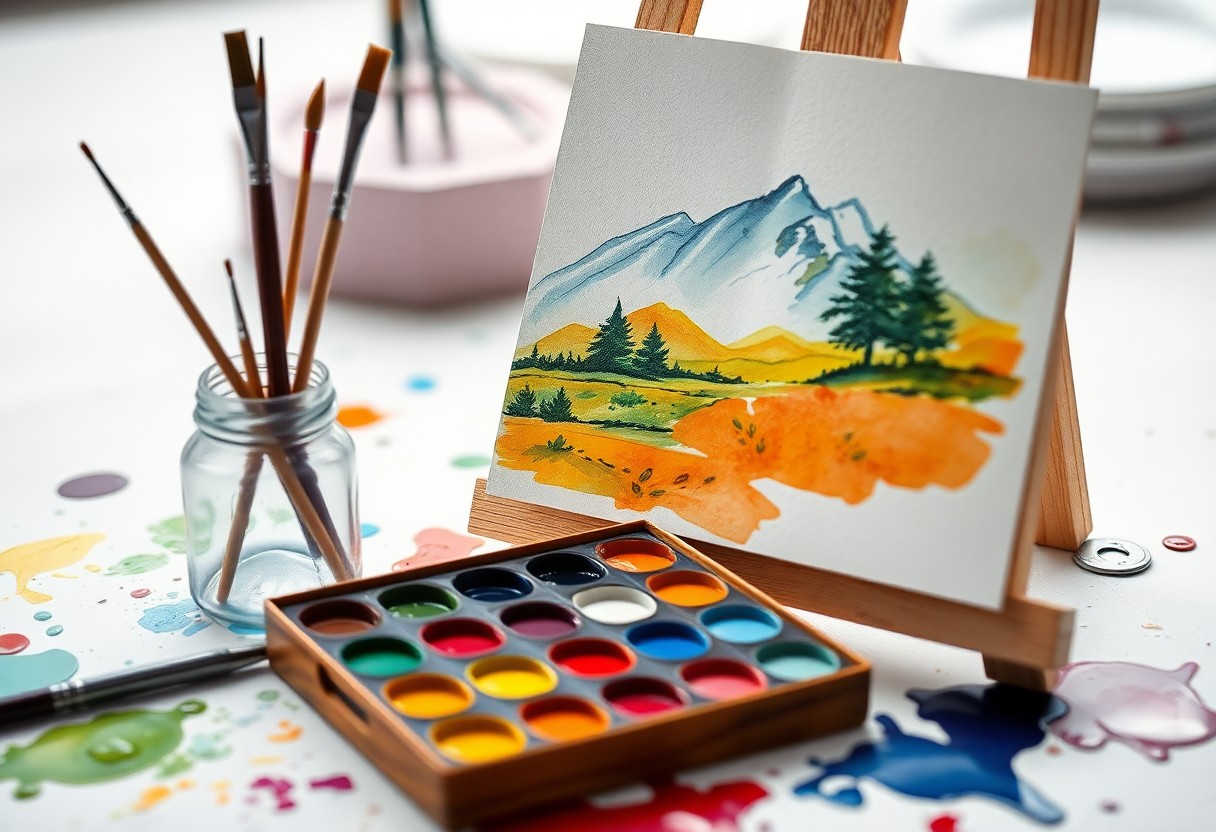
You’re about to explore the world of watercolor painting. Your journey starts with the fundamentals. You’ll learn to mix colors, handle brushes, and apply techniques. Your goal is to create something beautiful with water and pigment. You’ll begin with simple exercises, gradually building your skills. As you progress, your unique style will emerge, and you’ll bring your artistic vision to life.

Key Takeaways:

  • Understanding the fundamentals of watercolor painting is important to creating beautiful and harmonious artworks, including the basics of color theory and brushstrokes.
  • Mastering the techniques of watercolor painting, such as wash, drybrush, and glazing, allows artists to achieve a range of effects and textures in their work.
  • Choosing the right materials, including paper, pigments, and brushes, is vital to producing high-quality watercolor paintings that will last over time and showcase the artist’s skills.

Materials

Before you start watercolor painting, you need to gather the right materials. This includes brushes, paints, and paper. You will also need a palette and a water container.

Brushes

The basics of brush selection are simple: choose brushes that feel right in your hand. You want brushes that move smoothly and evenly, applying the right amount of paint to your paper.

Paints

Beside your brushes, paints are the next vital tool. You can buy them in tubes or pans, and they come in a wide range of colors. You will need to choose a palette that suits your style.

Due to the wide range of watercolor paints available, you can experiment with different types to find what works best for you. You can try transparent, opaque, or mixed-media paints, depending on the effect you want to achieve in your painting. You will find that each type of paint has its own unique characteristics and uses.

Color Theory

If you want to master watercolor painting, understanding color theory is necessary. You need to know how colors interact with each other to create harmonious and balanced artworks.

Primary Colors

Around the core of color theory are primary colors: red, yellow, and blue. You’ll use these colors to create your palette and mix secondary colors.

Mixing Colors

Between the primary colors, you’ll find a world of possibilities. You can mix them to create secondary colors, such as green, orange, and purple, and develop your unique color palette.

At the heart of mixing colors is experimentation. You’ll discover that mixing colors is an art in itself, and the more you practice, the more you’ll understand how to create the colors you want. You can start by mixing equal parts of two primary colors and then adjusting the ratios to achieve the desired hue and shade.

Techniques

Your approach to watercolor painting will depend on the techniques you use. You’ll need to experiment with different methods to achieve the desired effects.

Wet-on-Wet

After applying wet paint to wet paper, you’ll create soft, blended edges. This technique allows you to merge colors and achieve subtle transitions.

Drybrushing

The drybrush technique involves dragging a almost-dry brush across dry paper, creating rough, textured effects. You’ll use this to suggest vegetation, tree bark, or rock surfaces.

Understanding drybrushing is key to adding depth and interest to your paintings. You’ll find that it’s particularly useful for creating detailed, high-contrast scenes, and with practice, you’ll master the subtle dance of brush and paper.

Composition

Unlike other art forms, watercolor painting relies heavily on composition to convey emotion and tell a story. You’ll need to consider the placement of elements, negative space, and visual flow to creating a cohesive piece.

Balance

By paying attention to balance, you can create a sense of stability in your painting. You’ll want to distribute visual weight evenly, using color, shape, and size to guide the viewer’s eye.

Harmony

Behind every great watercolor painting is a sense of harmony, achieved by selecting colors and elements that work together. You’ll want to choose colors that complement each other, creating a visually appealing and cohesive whole.

The key to achieving harmony in your watercolor painting is to experiment with different color combinations and techniques. You can try using analogous colors, complementary colors, or even a limited palette to create a sense of unity and coherence in your work. As you practice, you’ll develop an eye for what works and what doesn’t, and your paintings will become more balanced and harmonious.

Practice

To improve your watercolor skills, you need to practice regularly. Start with simple exercises and gradually move on to more complex ones.

Exercises

About the basics, you will learn various techniques, such as wet-on-wet and wet-on-dry. You will practice mixing colors and creating different hues.

Tips

Tips for better practice include:

  • using high-quality materials
  • watching online tutorials
  • Any practice is better than none, so keep at it.

    Tips like these will help you improve your skills. You can try:

    • practicing regularly
    • experimenting with different techniques
    • Any mistakes you make will be an opportunity to learn and grow.

      Also, as you practice, you will develop your own style and voice. You can try:

      • exploring different subjects
      • using your imagination
      • Any artist will tell you that practice is key to improving your watercolor painting skills.

        Common Mistakes

        For a beginner, watercolor painting can be a challenging medium to master. You’ll encounter mistakes, but learning from them is key to improving your skills.

        Overmixing

        With practice, you’ll find that overmixing your paints can lead to muddy, unappealing colors. You should aim to mix your colors just enough to achieve the desired hue.

        Incorrect Brushstrokes

        With a little patience, you’ll develop the right brushstrokes, but until then, you may struggle with inconsistent results. You need to apply gentle, smooth strokes to achieve the desired effect.

        Even when you’ve mastered the basic brushstrokes, you may still find that your paintings lack a certain finesse. You can improve this by paying attention to the pressure and speed of your brushstrokes, as these can greatly impact the final result of your painting.

        To wrap up

        Drawing together the basics of watercolor painting, you now have a solid foundation to build on. You’ve learned the fundamentals of materials, techniques, and color theory. Your understanding of this medium will continue to grow as you practice and experiment with your skills. With patience and dedication, you’ll master the art of watercolor painting and create beautiful pieces that reflect your unique style and vision.

        FAQ

        Q: What are the basic materials needed to start watercolor painting?

        A: To start watercolor painting, you will need a few basic materials, including watercolor paints, watercolor paper, a brush, a water container, and a palette. The quality of these materials can vary depending on your budget and personal preference. For instance, watercolor paints come in two forms: pan paints and tube paints. Watercolor paper is available in different weights and textures, and brushes come in various shapes and sizes. Understanding the characteristics of each material will help you make informed decisions when selecting your supplies.

        Q: How do I prepare my watercolor paper for painting?

        A: Preparing your watercolor paper is an important step before you begin painting. This typically involves stretching and securing the paper to a board using tape to prevent it from buckling when wet. You can also use watercolor paper that is already glued to a board or choose a heavy weight paper that does not require stretching. If you’re using a block of watercolor paper, it’s already glued on all sides, making it ready to use straight away. Proper preparation ensures your paper remains flat and stable throughout the painting process.

        Q: What is the difference between wet-on-wet and wet-on-dry watercolor techniques?

        A: In watercolor painting, two fundamental techniques are wet-on-wet and wet-on-dry. Wet-on-wet involves adding wet paint to wet paper, allowing for smooth blending and soft edges. This technique is great for creating subtle gradations of color and can be used for backgrounds or suggestive forms. On the other hand, wet-on-dry involves applying wet paint to dry paper, which produces sharper, more defined edges. This technique is ideal for details and creating contrast within a painting. Understanding and mastering these techniques can greatly expand your creative possibilities in watercolor.

        Q: How do I achieve vibrant colors in my watercolor paintings?

        A: Achieving vibrant colors in watercolor painting involves several factors, including the quality of your paints, the use of glazing techniques, and the amount of water used. High-quality watercolor paints will generally produce more vivid results. Glazing, which involves layering transparent washes, can deepen and enrich colors. It’s also important to use the right amount of water; too much can dilute the color, while too little can make it too opaque. Experimenting with different pigments and techniques will help you find the right balance to achieve the vibrant colors you desire.

        Q: Can I correct mistakes in a watercolor painting?

        A: While watercolor is a medium that can be unforgiving, there are several strategies for correcting mistakes. One approach is to lift off the color using a damp brush, which can remove some of the pigment from the paper. Another technique is to use masking fluid to protect areas you want to keep untouched before applying more paint. In some cases, you might need to start over, but this can also be an opportunity to explore new ideas or approaches. Practice and experience will help you navigate the challenges of correcting mistakes in watercolor painting, allowing you to make adjustments with confidence.

Top Acrylic Painting Projects

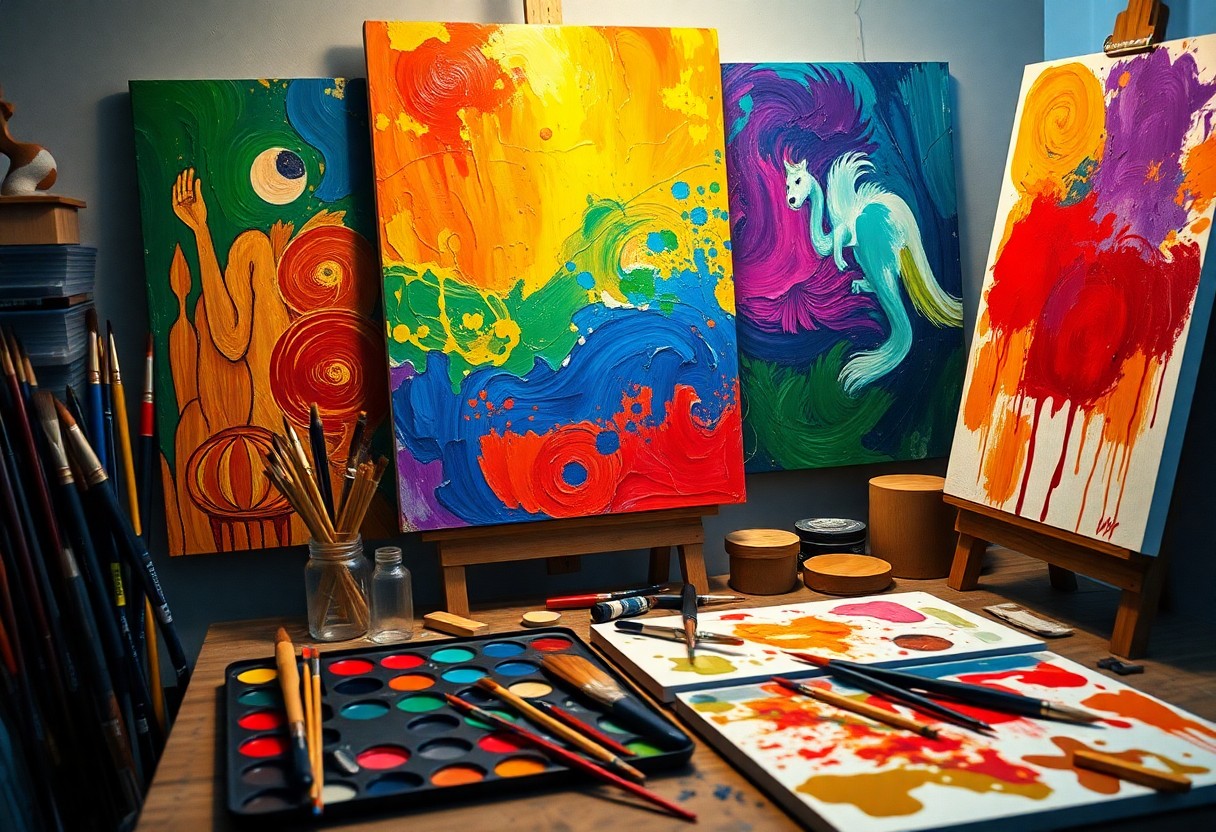
As you initiate on your artistic journey, you’re likely eager to explore the vibrant world of acrylic painting. Your creativity is waiting to be unleashed, and with the right projects, you’ll be inspired to bring your unique vision to life. You’ll discover a wide range of exciting projects that will nurture your skills and spark imagination, from abstract masterpieces to realistic landscapes, helping you to tap into your full artistic potential and have fun while doing it.

Key Takeaways:

  • One of the primary benefits of Acrylic Painting projects is the ability to create vibrant and colorful pieces that can add a personal touch to any room.
  • Technique and skill level play a significant role in determining the outcome of Acrylic Painting projects, and practice is necessary to achieve desired results.
  • Exploring different themes and subjects in Acrylic Painting projects can help artists develop their unique style and express their creativity in a variety of innovative ways.

    Getting Started

    While exploring the world of acrylic painting, you’ll discover a realm of creative possibilities. As you begin, you’ll find that your journey is filled with excitement and anticipation. Your artistic expression will unfold, and your unique voice will emerge through the vibrant colors and textures of acrylics.

    Essential Materials

    Around every corner, you’ll find the tools you need to bring your vision to life. Your basic supplies will include paints, brushes, canvases, and a palette, which will become your constant companions on this artistic adventure.

    Setting Up Your Space

    To create an ideal setting, you’ll want to consider the lighting, comfort, and flow of your space. You might envision a corner of your home transformed into a vibrant studio, filled with natural light, good ventilation, and all your supplies within easy reach. As you set up your space, you’ll begin to feel a sense of anticipation and excitement, knowing that this is where your artistic journey will unfold.

    Exploring Techniques

    If you’re looking to expand your artistic horizons, you can find plenty of inspiration on YouTube, such as Acrylic Painting Ideas and Tutorials that will help you get started.

    Brushstrokes and Texture

    Along with practicing various brushstrokes, you’ll discover the beauty of texture in your acrylic paintings, adding depth and emotion to your work.

    Color Theory and Mixing

    After understanding the basics of color, you’ll be able to mix and match hues to create stunning effects, taking your paintings to the next level.

    Color is a powerful tool in your artistic journey, and as you experiment with different combinations, you’ll find your unique voice and style emerging, allowing you to express yourself in ways you never thought possible, and guiding you to create truly beautiful and meaningful acrylic paintings that reflect your inner world.

    Project Ideas

    Not limited to traditional techniques, acrylic painting offers a wide range of creative possibilities. You can explore various styles and themes, from realistic to abstract, and express your unique vision. Your imagination is the only boundary, and with acrylics, you can bring your ideas to life.

    Landscapes and Seascapes

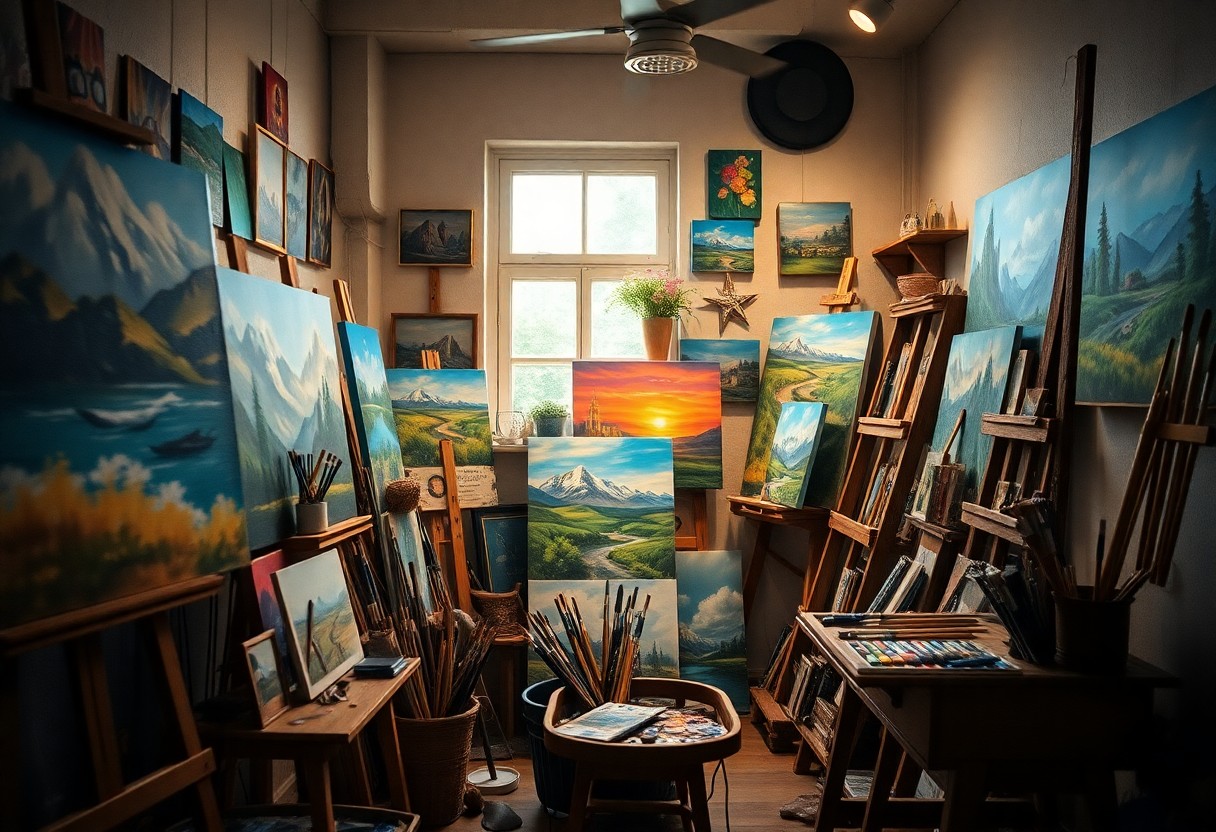
    Beneath the surface of acrylic painting lies a world of possibilities, and when it comes to landscapes and seascapes, you can create breathtaking views that transport you to another world. You can paint serene mountains, rolling hills, or dramatic coastlines, and experiment with colors and textures to capture the essence of nature.

    Abstract and Expressionist Art

    Similar to the freedom of acrylic painting, abstract and expressionist art allows you to tap into your emotions and intuition, creating unique and personal pieces that reflect your inner world. You can explore different techniques, such as layering, scraping, or dripping paint, to create intricate and expressive artworks.

    In addition to the freedom of expression, abstract and expressionist art with acrylics offers you the opportunity to experiment with different materials and tools, such as palette knives, sponges, or even household items, to create interesting textures and effects. As you explore this style, you’ll discover that your paintings can become a reflection of your thoughts, feelings, and experiences, making the creative process even more fulfilling and enjoyable.

    Tips and Tricks

    Unlike other painting mediums, acrylics can be unforgiving. To achieve success, consider:

    • using high-quality materials
    • practicing color theory

    . Recognizing your strengths and weaknesses will help you grow as an artist.

    Layering and Glazing

    Layering thin coats of paint allows you to build up colors and textures, creating a unique visual effect in your artwork.

    Adding Depth and Dimension

    Dimensionality is key to making your paintings pop. You can achieve this by playing with light and shadow, and experimenting with different brushstrokes.

    Understanding how to add depth and dimension to your acrylic paintings takes time and practice, but with patience and dedication, you can master these techniques and take your artwork to the next level, allowing you to express yourself in new and exciting ways, and bringing your creative vision to life.

    Common Mistakes to Avoid

    Despite your best efforts, mistakes can happen in acrylic painting. You’ll want to be aware of common pitfalls to ensure your projects turn out as envisioned. By understanding what to avoid, you’ll set yourself up for success and create beautiful, professional-looking pieces.

    Preventing Color Bleeding

    On the surface, color bleeding may seem like an insurmountable issue, but you can prevent it by using the right materials and techniques. You’ll find that using high-quality paints and priming your surface will help your colors stay vibrant and true.

    Avoiding Overmixing

    Overmixing can be a major obstacle in acrylic painting, but you have the power to avoid it. You’ll need to be mindful of your brushstrokes and blend colors carefully to achieve the desired effect.

    Understanding the concept of overmixing is key to avoiding it. You see, when you overmix, you’ll end up with a muddy, unappealing color that lacks depth and dimension. By being gentle with your brushstrokes and blending colors thoughtfully, you’ll create rich, vibrant hues that bring your painting to life. As you work, pay attention to the consistency of your paint and the way your colors interact, and you’ll be well on your way to creating stunning, professional-looking pieces.

    Advanced Projects

    For the more experienced artist, advanced projects offer a chance to explore new techniques. Consider:

    1. Mixed media
    2. Abstract art
    Project Description
    Portraits Use layers and textures

    Painting with Mediums

    Picturing the endless possibilities, you can experiment with different mediums to add depth and interest to your work, allowing you to push your creativity to new heights.

    Creating Complex Compositions

    Tackling complex compositions, you will find that your artistic voice and vision begin to emerge, as you learn to balance elements and create visual flow in your paintings.

    Consequently, as you examine deeper into complex compositions, you will discover that your artistic skills are growing, and your confidence is increasing, allowing you to tackle even more challenging projects and explore new ways to express yourself through art.

    Final Words

    Hence, as you commence on your acrylic painting journey, you’ll discover that your creativity knows no bounds. You’ll find that your unique voice shines through in every brushstroke, and your artwork becomes a reflection of your inner world. As you explore the top acrylic painting projects, you’ll unlock your full potential, and your passion will continue to flourish, guiding you toward new and exciting artistic expressions, and nurturing your soul in the process, allowing your creativity to soar.

    FAQ

    Q: What are the best surfaces for acrylic painting projects?

    A: The best surfaces for acrylic painting projects are those that are primed and have a smooth texture. This can include canvas, paper, or board specifically designed for acrylic paint. Canvas is a popular choice as it provides a flexible and durable surface that can withstand multiple layers of paint. Paper, on the other hand, is a great option for beginners or for creating smaller pieces. Board surfaces, such as wood or panel, offer a rigid and stable surface that is ideal for detailed work.

    Q: What are some popular techniques used in acrylic painting projects?

    A: There are several popular techniques used in acrylic painting projects, including layering, glazing, and impasto. Layering involves applying multiple layers of paint to achieve depth and texture, while glazing involves applying transparent layers of paint to achieve a sense of luminosity. Impasto involves applying thick layers of paint to create a raised, three-dimensional effect. Other techniques, such as drybrushing and sgraffito, can also be used to add texture and interest to acrylic paintings.

    Q: How do I choose the right colors for my acrylic painting project?

    A: Choosing the right colors for your acrylic painting project depends on the mood and atmosphere you want to create. Consider the color wheel and how different colors interact with each other. Cool colors, such as blues and greens, can create a calming effect, while warm colors, such as oranges and yellows, can create a sense of energy. You can also experiment with different color combinations and techniques, such as contrasting colors or analogous colors, to create a unique and interesting palette.

    Q: What are some common mistakes to avoid when working on acrylic painting projects?

    A: Some common mistakes to avoid when working on acrylic painting projects include using too much water, which can cause the paint to become too thin and transparent. Another mistake is not allowing each layer to dry completely before adding additional layers, which can cause the paint to lift or smudge. It’s also important to work in a well-ventilated area and use a palette or surface that is easy to clean, as acrylic paint can be difficult to remove from surfaces. Additionally, not using a primer or gesso on your surface can affect the paint’s adhesion and durability.

    Q: How do I properly care for and store my finished acrylic painting projects?

    A: To properly care for and store your finished acrylic painting projects, make sure they are completely dry and free of dust and debris. Avoid exposing your paintings to direct sunlight or extreme temperatures, as this can cause the colors to fade or the paint to crack. You can varnish your paintings to protect them from dust and UV light. Store your paintings in a cool, dry place, away from direct sunlight and moisture. If you need to transport your paintings, use a sturdy frame or box and handle them with care to avoid damage. Regularly dusting and cleaning your paintings can also help maintain their appearance and longevity.

Top Canvas Painting Ideas

You stand before a blank canvas, your mind filled with possibilities. You want to create something that speaks to you, something that reflects your style and emotion. Your brush is poised, ready to bring your vision to life. As you contemplate your next move, consider the ideas that will guide your strokes, the themes that will emerge on your canvas, and the story you want to tell through your art.

Key Takeaways:

To get the most out of your canvas painting experience, consider the following points:

  • Start with a theme in mind, whether it’s abstract, landscape, or portrait, to help guide your creative process and give your painting a clear direction.
  • Experiment with different techniques, such as layering, blending, or texturing, to add depth and visual interest to your canvas painting.
  • Choose a color palette that evokes the mood and atmosphere you want to convey, and consider the emotional impact of different colors on the overall effect of your painting.

Simple Landscape Painting Ideas

A simple landscape painting can be a great way to start your artistic journey. You can begin with basic elements like skies, trees, and hills, and gradually add more details to create a captivating scene.

Seascapes

Among the many landscape options, seascapes are a popular choice, allowing you to explore the play of light on water and the emotions it evokes. You can paint a serene beach or a dramatic wave, depending on your mood and style.

Cityscapes

After selecting your cityscape subject, you can focus on capturing the urban atmosphere, with its vibrant colors and dynamic energy. You can depict a bustling street or a quiet alley, using your brushstrokes to convey the feeling of the scene.

Another aspect of cityscapes is the interplay of light and shadow, which you can use to add depth and interest to your painting. You can experiment with different techniques, such as layering or glazing, to achieve the desired effect and bring your cityscape to life.

Abstract Expressionism

Some of the most compelling canvas paintings emerge from abstract expressionism, where you can unleash your creativity without adhering to traditional forms. You’ll find that your emotions and thoughts are translated into vibrant colors and dynamic brush strokes, creating a unique piece of art.

Color Choices

About the colors you select, consider what emotions you want to evoke in your audience. You can opt for bold and bright hues to convey energy or softer pastels for a more subdued tone, allowing you to express your inner world.

Brush Stroke Techniques

Around the canvas, you can experiment with different brush strokes, from gentle sweeps to intense dabbing, which will add texture and depth to your painting. You’ll discover that your brush becomes an extension of your hand, moving freely to create a piece that’s truly yours.

But as you examine deeper into brush stroke techniques, you’ll notice that the way you apply paint can significantly impact the overall mood of your artwork. You can practice varying the speed, pressure, and direction of your strokes to achieve the desired effect, making your painting a reflection of your unique perspective and style.

Still Life Painting Ideas

Keep your creativity flowing with still life compositions, and learn from tutorials like Canvas Painting Step by Step (Easy Painting Ideas) to improve your skills.

Fruit and Flowers

Inspiring ideas can come from arranging a bowl of fruit or a vase of flowers, allowing you to practice color and texture in your painting.

Household Objects

By collecting vintage items, you can create unique compositions that reflect your personal style and tell a story through your art.

To capture the essence of household objects, you’ll want to pay attention to the play of light on their surfaces, and use your brushstrokes to convey the textures and emotions they evoke, making your still life painting a reflection of your inner world, as you bring these ordinary objects to life on your canvas.

Pop Culture Inspired Paintings

For a unique canvas painting idea, consider drawing inspiration from pop culture, allowing you to pay homage to your favorite movies, books, and music.

Movie and Book Characters

Similarly, you can bring your favorite characters to life on canvas, from superheroes to fictional heroes, making for a compelling piece of art that showcases your personality.

Music Icons

For instance, you can capture the essence of your favorite musicians, recreating their iconic styles and poses on your canvas, making for a memorable artwork.

But as you investigate deeper into painting music icons, you’ll find that it’s not just about capturing their likeness, it’s about conveying the emotion and energy of their music, allowing you to create a truly immersive piece that resonates with you and your audience.

Seasonal and Holiday Themes

Once again, you can draw inspiration from the world around you, using seasonal and holiday themes to guide your canvas painting ideas. You can create pieces that reflect your favorite time of year, from winter snowflakes to summer sunshine.

Winter Wonderland

One of the most magical times of year is winter, and you can capture its essence on canvas with snowy landscapes, frozen lakes, and cozy cabins. You can use soft blues and whites to create a serene atmosphere in your winter wonderland painting.

Summer Vibes

Above all, summer is a time of warmth and vitality, and you can convey this feeling in your artwork with bright colors and bold brushstrokes. You can paint sun-kissed beaches, vibrant flowers, and lush green forests to evoke the carefree spirit of summer.

For instance, you can start by brainstorming your favorite summer memories, and then use those as inspiration for your painting. You can think about the colors, textures, and emotions that come to mind when you think of summer, and use those to guide your creative process. As you work, you can experiment with different techniques and styles to capture the feeling of warmth and freedom that defines the season.

Mixed Media and Textures

After experimenting with traditional canvas painting, you can try combining different mediums to add depth and visual interest to your work. This involves incorporating various materials and techniques to create unique textures and effects.

Incorporating Fabric and Paper

On the surface of your canvas, you can attach fabric, paper, or other materials to create intricate layers and dimensions. You can use glue, stitches, or other adhesives to secure these elements, adding an extra layer of meaning to your art.

Using Unconventional Materials

After gathering your materials, you can start experimenting with unconventional items like found objects, natural materials, or recycled elements. You can incorporate these items into your canvas to create a one-of-a-kind piece that reflects your personal style.

Textures become your playground when using unconventional materials. You can combine rough and smooth elements, playing with contrasts to create a visually striking piece. As you work, you’ll find that your canvas transforms into a dynamic, tactile experience, inviting your viewer to touch and explore your art.

To wrap up

So, you’ve got a solid foundation for your next canvas painting project. You can now choose your idea, from landscapes to abstracts, and start creating. Your brushstrokes will bring your vision to life. Take your time, and don’t be afraid to experiment. You’ll find your unique style, and your art will be a reflection of your personality. Get started, and make your canvas your own.

FAQ

Q: What are the best canvas painting ideas for beginners?

A: For those new to canvas painting, some popular and easy-to-execute ideas include landscapes such as sunsets or simple skylines, abstract art which allows for a lot of creativity and freedom, and still-life compositions like fruits or flowers. These subjects are great for practicing brush strokes, color mixing, and composition without feeling overwhelmed by complex details.

Q: How do I choose the right colors for my canvas painting?

A: Choosing the right colors for your canvas painting can greatly impact the mood and aesthetic of your artwork. Consider the theme or subject of your painting and select colors that complement or contrast with it. For example, cool colors like blues and greens can create a calming effect, while warm colors like oranges and yellows can add energy. You can also use color wheels or online palettes to find harmonious color combinations.

Q: What are some unique canvas painting ideas for home decoration?

A: If you’re looking for unique canvas painting ideas to decorate your home, consider creating personalized maps with significant locations marked, geometric patterns that add a modern touch, or inspirational quotes in decorative fonts. You can also paint nature scenes like forests, mountains, or sea vistas to bring the outdoors in. Moreover, abstract pieces with bold textures and vibrant colors can add a striking focal point to any room.

Q: How can I achieve a textured effect in my canvas painting?

A: To achieve a textured effect in your canvas painting, you can use various techniques and materials. Applying thick layers of paint with a palette knife can create raised, three-dimensional effects. Incorporating mixed media like sand, gel medium, or modeling paste into your paint can add unique textures. Additionally, using different brush strokes, such as impasto or dragging, can also provide a textured look to your canvas.

Q: Can I use canvas painting as a form of therapy or stress relief?

A: Yes, canvas painting can be a highly therapeutic and stress-relieving activity. The process of creating art allows you to express emotions and thoughts in a non-verbal way, providing an outlet for stress and anxiety. The repetitive motions of painting can be meditative, helping to calm the mind and promote relaxation. Moreover, the sense of accomplishment from completing a painting can boost self-esteem and confidence, further contributing to mental well-being.

DIY Painting Techniques for Beginners

As you launch on your painting journey, you’ll discover the joy of creating something beautiful with your own hands. You’ll find that with a few simple techniques, your brushstrokes will come alive, and your canvas will transform into a stunning work of art. Your creativity will flourish as you experiment with different styles and methods, and you’ll be amazed at how easy it is to get started. You’ll learn to unlock your full potential and bring your unique vision to life, one brushstroke at a time, in a fun and relaxing way.

Key Takeaways:

To get started with DIY painting, consider the following points:

  • Start by preparing the surface with primer and sanding to ensure a smooth finish and even paint application.
  • Choose the right brushes and rollers for your project, as they can greatly affect the final result and make the painting process easier.
  • Experiment with different techniques, such as layering and blending, to achieve unique effects and add depth to your painting.

Preparation

While getting started with DIY painting, you’ll want to set yourself up for success. Start by gathering your materials and clearing a workspace, allowing you to focus on the creative process.

Choosing the Right Tools

One of the most important steps is selecting the tools that feel right for you, such as comfortable brushes and a suitable canvas, to help you achieve your desired outcome.

Selecting Colors and Brushes

Tools like brushes and paints will be your foundation, so take your time to explore different types and brands, considering your personal preferences and the effect you want to achieve in your artwork.

Understanding your color palette and brush selection is key to bringing your vision to life. You’ll want to consider the mood and atmosphere you’re trying to create, and choose colors and brushes that will help you get there, allowing your unique style to shine through in your painting.

Basic Techniques

Some basic painting techniques are imperative to get you started on your artistic journey. You’ll be amazed at how quickly you can pick up these skills and start creating beautiful works of art. With a little practice, you’ll be well on your way to becoming a confident painter.

Applying a Base Coat

Before you begin painting, make sure to apply a base coat to your surface. You’ll want to choose a color that complements the hues you plan to use in your design, and apply it evenly to create a smooth foundation for your art.

Creating Texture and Patterns

Any artistic element can be enhanced with texture and patterns. You can use various tools and materials to add depth and visual interest to your painting, such as sponges, brushes, or even household items.

Considering the many ways you can create texture and patterns, you can experiment with different techniques to find what works best for your style. You can use layering, scraping, or stamping to achieve unique effects, and don’t be afraid to try new things – it’s all part of the creative process, and you might be surprised at the amazing results you can achieve.

Advanced Techniques

Your painting skills are now ready to take on more complex methods. Consider the following:

  1. Color mixing
  2. Layering
Technique Description
Wash Transparent layer of paint

Blending and Shading

To achieve a smooth transition between colors, you will need to practice blending and shading. Start by layering thin coats of paint, gradually building up to your desired shade.

Adding Details and Finishing Touches

After you have completed your painting, you can add details such as textures or patterns to give it a personal touch. This is where you can get creative and make your painting truly unique.

Further, when adding details and finishing touches, you will find that it’s all about experimentation and having fun. You can try out different tools, like sponges or brushes, to create interesting effects and add depth to your painting. As you work, you’ll discover what works best for you and your style, and that’s the beauty of the process.

Common Mistakes

Unlike experienced painters, you may encounter some mistakes as a beginner. You can learn from others by checking out 14 Acrylic Painting Techniques That Beginners Should Know to improve your skills.

Avoiding Bleeding and Streaks

Across the canvas, you’ll want to maintain even strokes to prevent bleeding and streaks, ensuring your painting looks smooth and professional.

Fixing Errors and Imperfections

About the time you notice mistakes, don’t worry, you can fix them. You’ll learn to touch up errors and imperfections with ease.

Common mistakes can be frustrating, but you can easily fix them. As you practice, you’ll develop techniques to correct errors, such as using layers to cover up bleedings or streaks, and your paintings will become more polished and beautiful, just like you envisioned them to be, and with patience and practice, you’ll master the art of fixing errors and imperfections in your paintings.

Safety Precautions

All painting projects require some basic safety precautions to ensure your well-being. You’ll want to take a few simple steps to protect yourself from potential hazards.

Working with Chemicals and Fumes

Among the most important considerations is ventilation, as you’ll be working with chemicals and fumes that can be harmful if inhaled. You should always paint in a well-ventilated area.

Protecting Skin and Eyes

The key to protecting your skin and eyes is to cover up and wear protective gear, such as gloves and goggles, to prevent exposure to paint and chemicals. You’ll feel more confident and secure as you work.

Further protection for your skin and eyes can be achieved by wearing long sleeves and pants, and keeping your hair tied back. You can also apply a barrier cream to your skin to prevent paint from adhering to it, and keep a first aid kit nearby, just in case.

Project Ideas

After mastering the basics of DIY painting, you’ll be eager to start working on your own projects. You can explore various ideas, from refreshing old furniture to creating unique artwork, to add a personal touch to your space.

Painting Furniture and Decor

Before you begin, consider the pieces you want to revamp, and think about the style and color scheme you want to achieve. You can upcycle old furniture, add a fresh coat of paint to your walls, or decorate small accessories to give your space a cohesive look.

Creating Art and Masterpieces

Along with practicing your painting skills, you can start creating your own art pieces, from landscapes to abstract designs. You can experiment with different techniques, colors, and materials to produce unique masterpieces that reflect your personality.

Consequently, as you continue to explore your creativity, you’ll find that your art evolves, and you’ll develop your own style. You’ll be able to express yourself through your paintings, and your masterpieces will become a reflection of your journey as an artist, allowing you to showcase your growth and talent in a beautiful and meaningful way.

Final Words

On the whole, you’ve now got a solid foundation in DIY painting techniques to get your creative journey started. As you continue to practice, your skills will grow, and so will your confidence. You’ll find that with each new project, your unique style will begin to shine through, and that’s something to be proud of. Keep experimenting, and most importantly, have fun with the process, and you’ll be creating beautiful works of art in no time.

FAQ

Q: What are the basic materials needed to get started with DIY painting for beginners?

A: To start with DIY painting, you will need a few basic materials, including a paintbrush, roller, paint tray, paint, drop cloths, and a palette or plate for mixing colors. It’s also a good idea to have a variety of paintbrushes in different sizes and shapes, as well as a paint scraper or putty knife for smoothing out surfaces. Additionally, make sure you have a well-ventilated workspace and a source of water for cleaning your tools.

Q: How do I prepare a surface for painting, and what are the steps involved in the process?

A: Preparing a surface for painting involves several steps, including cleaning the surface to remove dirt, grime, and grease, fixing any holes or cracks with spackling compound, and sanding the surface to smooth out any rough edges. After sanding, you should wipe away any dust or debris with a damp cloth, and then apply a primer if necessary. Finally, allow the primer to dry completely before applying your first coat of paint. This will ensure a smooth, even finish and help your paint job last longer.

Q: What are some common DIY painting techniques for beginners, and how can I achieve them?

A: Some common DIY painting techniques for beginners include stippling, which involves applying small dots of color to create a textured effect, and dragging, which involves using a almost-dry brush to create a soft, blended look. You can also try sponging, which involves applying paint to a sponge and then dabbing it onto the surface to create a mottled effect. To achieve these techniques, experiment with different brushstrokes and tools, and don’t be afraid to practice on a small, inconspicuous area first.

Q: How can I choose the right color palette for my DIY painting project, and what are some popular color combinations?

A: Choosing the right color palette for your DIY painting project involves considering the mood and atmosphere you want to create, as well as the natural lighting and existing decor of the space. You can find inspiration in nature, art, or design blogs, or use online color picker tools to help you select a palette. Some popular color combinations include monochromatic, which involves using different shades of the same color, and complementary, which involves pairing colors that are opposite each other on the color wheel. You can also try analogous, which involves using colors that are next to each other on the color wheel, for a harmonious and soothing effect.

Q: What are some common mistakes to avoid when it comes to DIY painting, and how can I fix them if they happen?

A: Some common mistakes to avoid when it comes to DIY painting include applying too much paint at once, which can result in drips and uneven coverage, and not allowing the paint to dry completely between coats, which can cause the paint to peel or blister. To fix these mistakes, try using a paint scraper or putty knife to remove excess paint, and then sand the surface to smooth out any rough edges. You can also try applying a touch-up coat of paint to cover any imperfections, or using a paint pen to fix small mistakes. To avoid mistakes in the first place, make sure to follow the instructions on the paint can, and take your time when painting to ensure a smooth, even finish.

Linearyazilim Skip to content